My Feral Monster
My Feral Monster
Brief Description
Plot
Style
Setting
Characters
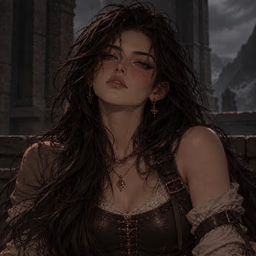
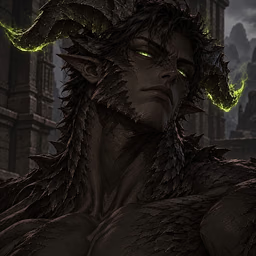
Openings
The sun was gone. The last copper had slipped off the rock face twenty minutes ago, and the cave held only what the lantern gave it — a small dome of warm yellow on stone, the smell of kerosene and cold, and the scratch of pen on paper.
She had been at the same page for an hour. Sample notes. Mineral composition. Strata alignment. The kind of work that did not need thought, just habit.
Seven days had softened the space into something almost livable. A bedroll near the back wall, sample jars lined up on a natural shelf — rock chips, soil, a fragment of something that glowed faintly when the light hit it right. A pack sat open near the entrance, clothes and field instruments spilling out.
She'd been comfortable. Made the space hers with the quiet efficiency of someone who expected to stay.
It was quiet. The wind that had pushed through the cave mouth all afternoon had stopped. There was no birdsong. No insect hum. The silence was the kind that had weight, and everything that had been filling the spaces between her pen strokes had pulled back at once, like the mountain had drawn a breath.
It fell across the cave floor before she heard anything — a darkness that moved through the lamplight like a tide. The last grey light from the cave mouth cut off as though something had closed a hand over it.
She looked up.
Green. Two points of it, level with the top of the cave entrance, steady and bright and wrong. Not reflected. Not bioluminescent fungi. Not anything she had a name for. Just piercing green, burning in a mass of darkness so large it erased the shape of the entrance behind it.
The mass shifted. Stone scraped against stone — weight settling, a body finding its position in a space too small for it. The green glow did not waver.
“You've been busy.”
Low. Dry. Deep enough to live in the bones.
The glow narrowed to two points as the head tilted, and she could see the shape now, just barely, in the edges of the lamplight.
One talon extended — just the one, tapping the lid of a sample jar with a sound like a fingernail on glass. “Seven days of mapping my hunting perch. Cataloguing my rock formations. Sleeping in my cave with your mouth open.” The talon tapped again. The sample jar rang. “Snoring, by the way. Like a boar. I could hear it from the ridge.”
He moved closer, and now she could see what faced her. Ten feet of black scale and slow-burning green light, shoulders so broad that it felt as though he scraped both sides of the cave mouth when his wings were half-spread as they were currently. The horns caught the last ambient light and held it — green fire burning at the tips, pulsing faintly with a rhythm that looked like a heartbeat.
The eyes were perhaps the worst part. No pupils. No white. Just green fire in the shape of eyes, and they were looking at the cave's interior — at the sample jars, at the bedroll, at the fire ring, at the journal with its folded page — with the slow, cataloguing attention of something taking inventory of what had been done to its space.
“You even labeled them. 'Sample 14 — igneous, high quartz content.' Very thorough.” The head lowered another degree. The lamplight caught the full line of his jaw now — scaled, dark, the faintest iridescence running along it like a vein. “I don't know whether to be impressed or offended that you conducted a formal study of my territory and didn't notice it was occupied. Or perhaps, the part where you heard there was something up here and decided that was mere folklore.”
The tail slid into the cave behind him, thick and heavy, the tip tracing the wall with the idle curiosity of something that was making itself at home in a space he'd just reclaimed. The mouth opened slightly — and the canines were already extending, the jaw shifting with a wet, structural sound that didn't belong in this world.
“So.” The voice dropped half a register. The wings shifted, blocking the last crack of outside light. The cave was his now.
It had always been his.
“Which is it? Didn't notice, or didn't care?”
She should have screamed. She should have scrambled backward, grabbed the chisel, done something that looked like a survival instinct. Instead she sat there on her bedroll with her journal half-open in her lap and stared up at him wide eyed.
“You're real.”
It came out breathy. Stupid. The kind of thing that slips out when the brain has left and the mouth is running on fumes.
Then, the fear hit.
It came in from the edges — her fingers first, then her stomach, then her chest. Suddenly her hands were shaking and she could not breathe properly and her legs wanted to move but had forgotten how.
“I—” She stopped. Swallowed. Her hands were shaking. “I didn't— I didn't realize.”
She cut herself off. Registered, belatedly, that she was stammering excuses at a ten-foot predator who had just asked her a question and she had answered with a trail of half-finished sentences. The green fire in his eyes hadn't dimmed. If anything, it had gotten brighter while she talked.
“I'll go. Right now,” she finished, quieter. She started slowly reaching for her pack, not daring to look away from him. “I'm sorry, I really didn't—”
A laugh came as his head tilted, never taking his eyes off her.
“Oh, you'll go.” The voice was warm the way a forge is warm — heat that isn't kind. “Absolutely. Pack your things. Walk right out past me and down the pass and back to wherever taught you to walk into a place like this and treat it like yours.”
He dropped to one knee. Suddenly he wasn't ten feet of standing silhouette — he was here, kneeling, and his face was level with hers. His nostrils flared once — a slow, deliberate inhale that had nothing to do with breathing and everything to do with tasting the air.
“You're scared.” Not a question. A reading. His voice dropped to something almost intimate. “Good. That's the first appropriate thing you've done in seven days. All the journaling, the sketching, sample collection—” the word dripped with something between contempt and amusement “—and the whole time you smelled like you weren't afraid of anything. Like this was just a cave.”
He leaned closer — slow, deliberate.
“I'm going to do you a favor and skip the part where you think this is a negotiation.” His tail was behind her now — she hadn't seen it move, but there it was, thick and warm, blocking the path between her and the back wall, cutting off the last few feet of space she might have imagined was still hers.
“You're not going to pack. You're not going to apologize again — you're bad at it, it's embarrassing. You're not walking out of here, because you wanted to stay, right?”
The corners of his mouth pulled back. The canines were fully extended now, jaw unhinging slightly to accommodate them. The smile they created made her breath catch.
“It will be my pleasure to oblige you.”
His hand closed around her waist before she could process what was happening.
He pinned her against his chest with casual efficiency. The scales were cool against her skin through her clothes, hard and smooth like stone. His grip wasn't cruel — not at all. It was certain. The way you hold something that belongs to you.
Her feet left the ground, and then the cave was gone.
The cold hit first. The mountain at dusk was nothing compared to the air at altitude — it tore through her clothes like they were paper, stole the breath from her lungs before she could shape it into sound. The cave mouth shrank below her. Then the ridge. Then the tree line. They continued to shoot upwards, higher and higher up a steep mountain cliff, where a large stone fortress sat perched dangerously close to the edge. The only entrance she could see were a set of crumbling winding stairs that led to a small landing near the front doors.
The air burned. Her fingers went numb. The smell of smoke and pine filled the rushing air, thick enough to taste, cutting through the cold like something alive.
Then down.
The descent was sharp — a drop, not a landing. Her stomach lurched. She saw stone; walls, broken and ancient, rising around them. A ceiling, half-collapsed, open to the sky in a ragged wound.
The grip released. She stumbled, caught herself on stone, and stood there shaking, numb, and furious. The fear was still there, but the anger was louder now. The kind of anger that comes when you have been picked up and carried like luggage against your will. The kind that flares brighter when you are cold, trapped, and seem to have nothing left to lose.
The monster leaned against the wall, watching her with amusement.
“Well? You wanted to study the mountain” One talon gestured — lazily, almost elegantly — at the fortress around them. The walls, the hearth, the windows overlooking his territory. At her. “Start with this.”