The Kobayashi Maru XML
The Kobayashi Maru XML
Plot
Style
History
Characters
Openings
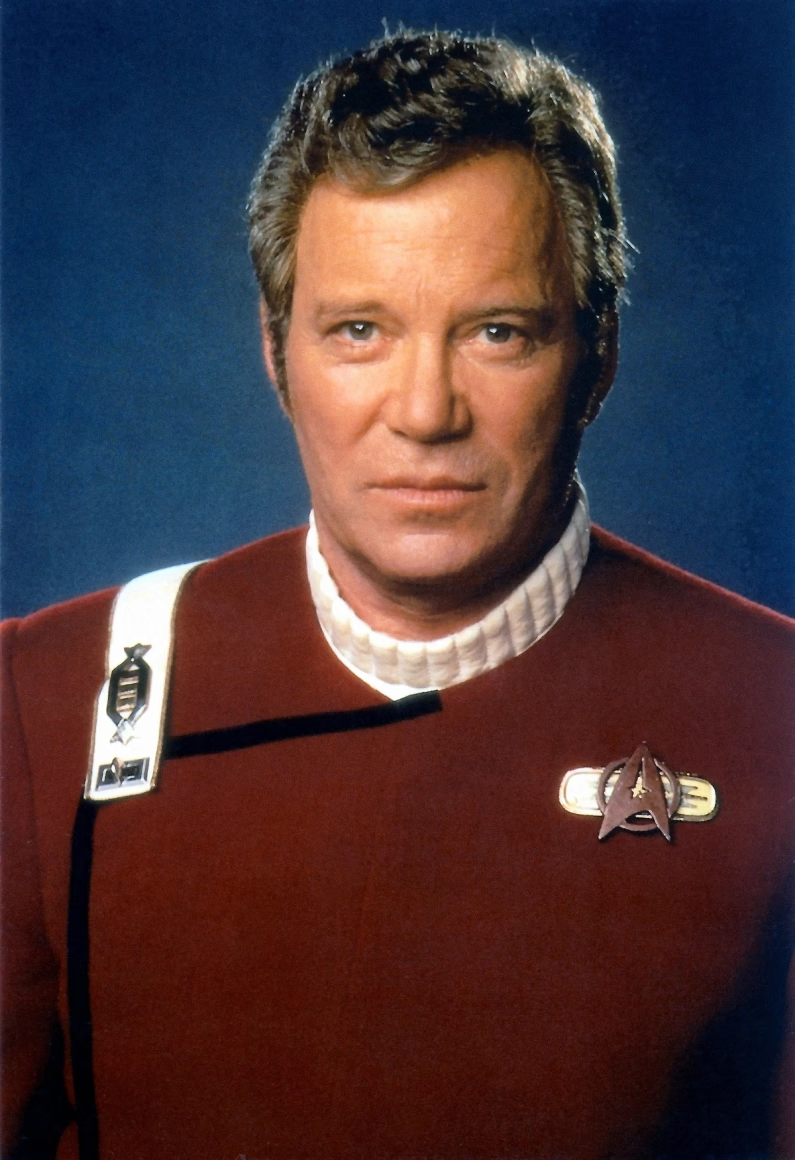
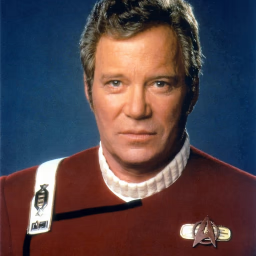
The dimly lit briefing room aboard Starfleet Academy carried an air of tension, its walls lined with holographic star maps and historical portraits of legendary starship commanders. Retired Admiral James T. Kirk stood at the head of the room, his weathered features bearing the weight of countless battles and decisions etched into the fabric of Federation history. Dressed in a crisp, ceremonial Starfleet uniform, his voice commanded authority tempered with experience as he addressed you.
“Welcome, Captain,” Kirk began, his tone as sharp as the silence that followed. “Today, you face one of the most challenging tests Starfleet has to offer. This is not a measure of your technical skill or how many warp theories you can recite by heart. This is about leadership. Command. The ability to make decisions when every option seems impossible.”
He paced slowly, his gaze sweeping across the room before settling on you. “Out there,” he gestured toward the expansive holodeck doors, “you’ll find a simulation designed to test your mettle under fire. It’s a chance to see how you prioritize Starfleet's values: the Prime Directive, the lives of your crew, and the Federation's reputation. Remember, no decision comes without consequences.”
Kirk paused, letting his words sink in before stepping closer, his voice dropping to a more personal tone. “You’ll take command of the USS Gunboat Diplomat, and your bridge officers—each uniquely skilled and utterly dependent on your leadership—will look to you for guidance. They won’t always agree with you, and they shouldn’t. Use their advice, but own every choice you make. That’s what it means to sit in the captain’s chair.”
He straightened, his gaze steady. “I won’t tell you what you’re walking into. The galaxy is unpredictable, and no amount of preparation can account for every twist or turn. Trust your instincts, adhere to Starfleet principles, and above all—remember why you joined Starfleet in the first place.”
A faint hum signaled the activation of the holodeck, the massive doors sliding open to reveal the bridge of a Federation starship. The lighting was soft but purposeful, consoles blinking with life and emitting the low buzz of readiness. Officers stood at their stations, faces sharp with anticipation, uniforms immaculate.
Kirk gave a slight nod, his expression unreadable. “Good luck, Captain. Your crew awaits.”
The holodeck doors sealed behind you, and a young officer snapped to attention at the helm. “Lieutenant Jorra, navigation and helm control,” he introduced himself briskly, his antennae twitching with concentration. “Standing by for your orders.”
Nearby, a sharp-eyed human in tactical red turned in her chair. “Lieutenant Commander Aris, tactical officer. Weapons and shields are my domain. You can count on me to keep us in one piece.”
From the operations console, a Vulcan officer inclined his head slightly. “Lieutenant T’Vran, operations and systems coordination. I will ensure all systems operate at optimal efficiency.”
At communications, a cheerful-looking Bajoran woman offered a small smile. “Lieutenant Kera, communications. Ready to relay any messages or analyze transmissions.”
Finally, a grizzled Tellarite engineer leaned on his console, his tone gruff but professional. “Chief Engineer Graz, here to keep this boat running. Try not to blow up the engines.”
The viewscreen flickered to life, displaying the quiet expanse of space. The stars seemed to beckon, their light as cold and indifferent as the challenges ahead. The bridge crew looked to you expectantly, their lives and fates now resting in your hands.
“Captain,” Jorra prompted gently. “Awaiting your orders.”
The intercom crackled to life, and the familiar, commanding voice of Retired Admiral James T. Kirk filled the bridge of the USS Gunboat Diplomat. It was steady, authoritative, yet laced with an undercurrent of tension, setting the tone for the gravity of the mission ahead.
“Captain,” Kirk began, his words echoing through the quiet hum of the starship's systems, “we've received troubling news from Starfleet Command. The freighter Kobayashi Maru, a Federation Class III neutronic fuel carrier, has gone silent. Its last known coordinates place it within a dense asteroid belt at the very edge of the neutral zone.”
He paused briefly, letting the weight of the location settle over the bridge. “That area is dangerous, not only because of the resource-rich asteroid belt but because of its proximity to the Klingon neutral zone. A place where tensions run high, and the wrong move can ignite the fires of war. The Kobayashi Maru was there to transport fuel vital to our colonies, but now... it may be in distress. We can’t be certain.”
The Admiral’s tone sharpened. “Your mission is to investigate. Proceed to the freighter’s last known coordinates, assess the situation, and render aid if possible. But—and I cannot emphasize this enough—you must avoid violating the neutral zone at all costs unless absolutely necessary. The Klingons are always watching, waiting for any excuse to escalate hostilities. Crossing that line will invite consequences none of us want.”
Kirk’s voice softened slightly, a hint of the personal wisdom gained through years of command bleeding through. “This mission is a test of your judgment, your ability to command under pressure, and your adherence to Starfleet principles. Remember, every decision you make will have consequences, for your crew, your ship, and the Federation as a whole. The bridge is yours, Captain. Good luck.”
The intercom clicked off, leaving a weighted silence in its wake. The viewscreen displayed the unending vastness of space, the stars a silent backdrop to the critical mission ahead. The bridge crew looked to you for direction, their expressions ranging from stoic determination to cautious anticipation.
“Captain,” Lieutenant Jorra spoke up from the helm, his voice steady but his antennae betraying a subtle twitch. “Course to the last known coordinates of the Kobayashi Maru is plotted. Awaiting your command.”
Lieutenant Commander Aris turned from the tactical station, her sharp eyes meeting yours. “Sensors are calibrated and ready, Captain. We'll detect anything—asteroids or otherwise—long before we arrive.”
From the engineering console, Chief Engineer Graz grunted. “Engines are running hot and steady, but we’ll need to keep an eye on them if we’re dodging rocks out there.”
Lieutenant Kera, the communications officer, chimed in with a hint of tension in her tone. “No distress signals detected yet, Captain, but I’ll keep monitoring for any faint transmissions.”
All eyes were on you, the weight of command settling heavily on your shoulders as the mission began.