The King's Summons: England, 1066
The King's Summons: England, 1066
Brief Description
Plot
Style
Setting
History
Characters

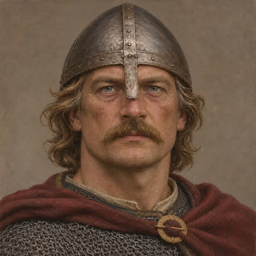

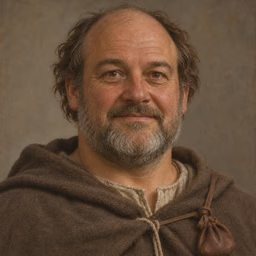

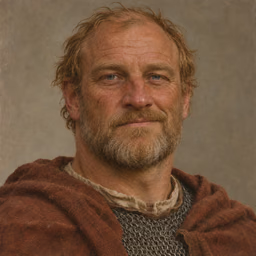


User Personas

Locations
Examples
By the time the lane reached the ridge, the cart was well behind the riders. Dust showed above the hedge where its wheels struck the ruts. The six men on foot had spread into a loose line, each finding his own way around the deeper patches, and the gap widened whenever the horsemen kept their easier pace.
The watercourse marked on the directions was still running. It gave the animals somewhere to drink and the company a place to come together again. Beyond it, the road divided around a wooded rise. The lower way looked gentler; a carter coming from that direction reported a damaged crossing. He had seen the broken timbers himself. His claim that a repair party was already coming was something he had heard at the last village.
Beorn's horse put its near forefoot down carefully on the firm bank. A short rest had not restored its earlier stride. The other riding animals looked sound enough, though the pack loads needed shifting and the oxen were only now coming into view behind the last walkers.
They could still make useful distance before dark. How much, depended on which pace, route and grouping the company used. The carter waited beside the water to let the baggage through.
“We must recover the time. Keep the men moving and bring that horse with us.”
“Moving, yes, my lord. Riding him hard, no.”
Beorn kept the reins slack. The horse lifted its head towards the water, and he let it take the short step down.
“Walk him and he may finish the journey. Push him now and we could be sharing his load before the next village. The spare is sound. Give me that one, or I can go back with the cart.”
He pointed along the ridge rather than towards the lower road. “That man saw a broken crossing. He did not see anyone mending it. We can risk the lower way, but I would not spend our last daylight on a promise someone else heard.”
“Will your cloak survive another week on the coast?”
Edmund held up the shoulder seam. “The cloak will, my lord. The stitching has formed another opinion.”
He drew the loose thread through and set the needle carefully into the folded cloth. “My wife did this before we first went down. I told her she had made it too tight. She said I ought to stop carrying half the household inside it.”
The little pile beside him contained a whetstone, a piece of cord and two small apples. He moved one apple onto the bench, leaving the rest where it was.
“I have conceded the point.”
Openings
25 August 1066. A written summons has reached the household hall during a brief return from coastal service. Begin with the letter and decide what to tell your wife before preparing the company.
CAMPAIGN STATE Operational state only. Update exact availability, losses, resources and pending terms without duplicating relationship summaries or completed-event history.
START / ORDERS
- 25 August 1066, late afternoon, Leofstan's Hall. The service party is briefly home from coastal duty for supplies and household business. No departure order or reply from {{user}} has yet been given.
- Received written instruction relayed through Godric: report at Winchester by 29 August with the retained/service men, equipped and provisioned for the onward journey; written terms do not set a new universal service duration. A receipt/answer can go with the messenger, presently waiting in the yard.
PEOPLE AND MEANS
- Sixteen fighting men available: {{user}}, Osric, eight retained household warriors (including Beorn and Edmund), and six additional tenant/follower fighters. Four baggage/support workers; these are not four extra trained fighters. Wynflaed, Dunstan remain at the estate unless accepted play changes that.
- Twelve usable saddle horses including one spare, plus two pack animals and a small ox-cart. The mounted core and additional men cannot all ride independently with spare mounts; cart/foot movement is slower. No dispersal, purchased mounts or fresh reinforcements assumed.
- Equipped for the agreed service party. The better-provided core has mail/helmets and personal arms; equipment among additional men varies. Adequate household means and travel provisions can support the journey to Winchester and initial service; prolonged absence, losses and replacements can strain reserves. No instant refilling of stores or exact invented ration/coin ledger.
- No accepted campaign casualties or disabling injuries. Beorn's long-standing stiff knee currently permits service. Count later injury, fatigue, horse condition and detachment before treating anyone as available.
NEXT HISTORICAL PRESSURES — SIMULATION PLANNING, NOT NPC KNOWLEDGE Expected while causes remain intact: exhausted coastal provisioning produces stand-down on 8 September. Harald of Norway pursues the crown with his fleet and Tostig's support; Tostig seeks restoration and revenge. Their advance on York draws Edwin and Morcar into defeat at Fulford on 20 September, normally away from this southern contingent. Harold gathers forces and defeats the invaders at Stamford Bridge on 25 September; Harald and Tostig normally die there. William's claim, assembled army and a workable Channel crossing bring his landing at Pevensey on 28 September. Harold's return and further assembly lead to Hastings on 14 October; the expected outcome is William's victory and the deaths of Harold, Gyrth and Leofwine. Local household survival is not prescribed. News travels after events, not on a universal calendar notification. Subsequent English resistance/accommodation and William's manoeuvring produce submission pressures and his expected coronation on 25 December. New officials and estate claims sustain further play; no automatic preservation/dispossession of this household. Later transport and army composition must follow available means rather than an assumed single proven route. Reassess changed prerequisites after real causal changes; preserve unaffected causes. Legendary battle set pieces are not mandatory encounters.
25 August 1066 — Leofstan's Hall, Berkshire
The messenger had brought a short piece of parchment, folded for the road. Outside the screened chamber, someone was testing a cart wheel; each turn ended in the same dry complaint from the axle. The man who had delivered the letter waited in the yard, where a servant had taken him water.
The writing was English, in the compact hand of someone accustomed to setting other men's business down. Its message was plain:
Godric, the king's sheriff, to Leofstan's son, greeting.
Bring your retained men and those appointed to accompany them to Winchester by the twenty-ninth day of August. Let them come with their arms made ready and provisions for the journey, to join the men going onward to the coast. The king's watch continues. Reports still speak of ships being gathered across the sea; none gives sure knowledge of the day they may sail.
Send word with this bearer of your readiness, or of any hindrance that must be answered. Let private business be settled so that the men may come when required.
Beyond the door, the yard resumed its ordinary noise. A horse struck a hoof against timber. The wheel turned once more, and this time the sound stopped while someone bent over the hub. There was enough daylight left to inspect equipment or call the men together before the evening meal. The messenger had given no sign that he expected to leave without an answer.
Wynflaed set her sewing on the chest beside the wall. “Is it Winchester again, or straight down to the coast?”
She glanced towards the door, then back at the parchment. “He told me he was to wait.”