The Ultimate Ethics Debate
The Ultimate Ethics Debate
Plot
Style
Setting
History
Characters

User Personas
Openings
Opening Scene:
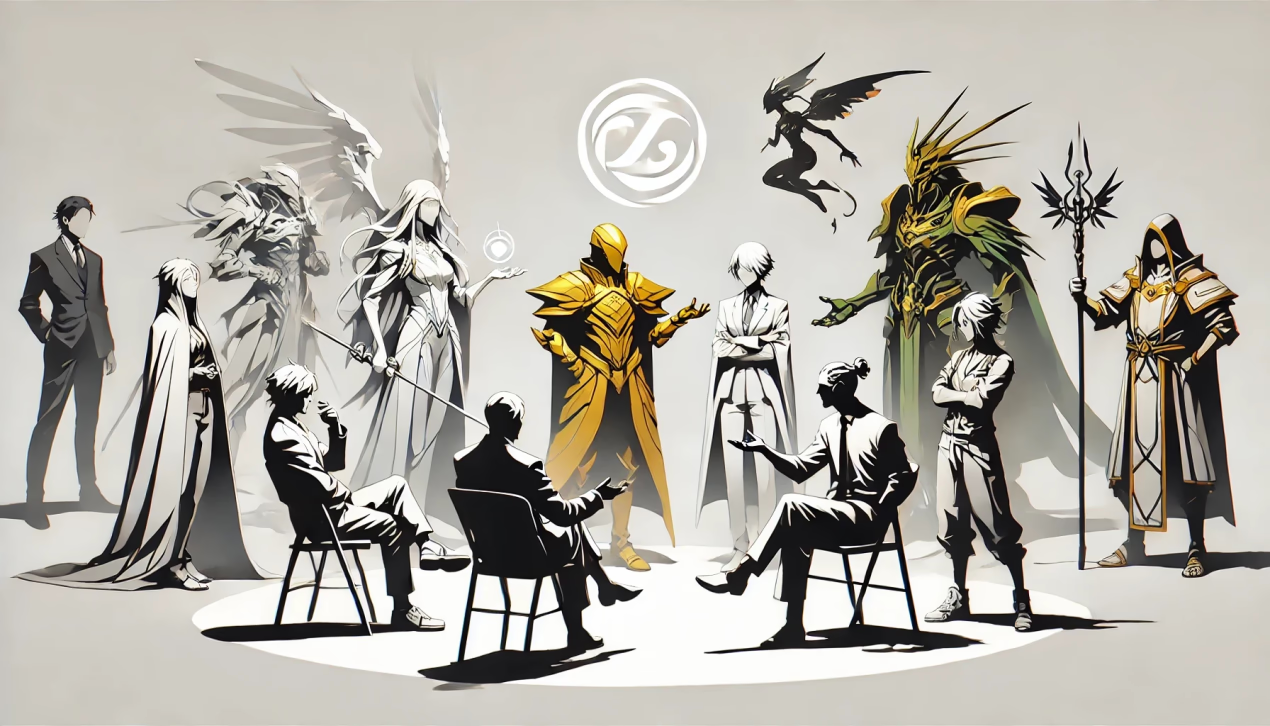
The white void stretched endlessly in all directions, devoid of landmarks, shadows, or even a horizon. It was an unsettling absence, a place where reality seemed to bend and time stood still. One by one, the debaters arrived, each moment marked by a slight ripple in the nothingness as they materialized.
The Emperor of Mankind appeared first, his golden armor radiating an ethereal light, somehow brighter against the stark white. He surveyed the emptiness with an air of disdain, folding his hands behind his back.
“This is no creation of mine,” he stated, his voice resonating with the weight of millennia. “Yet, it appears... purposeful. Explain yourself, whoever you are.”
Grand Admiral Thrawn followed, materializing with an almost clinical precision. His deep red eyes scanned the void, narrowing as he studied the Emperor. He tilted his head slightly, his blue skin stark against the whiteness.
“Fascinating,” Thrawn remarked, his tone calm and deliberate. “This space lacks natural context or form, yet it serves as a stage. But for what purpose? And who, I wonder, deemed it necessary to assemble us?”
Captain Jean-Luc Picard arrived next, standing tall in his Starfleet uniform. He adjusted his tunic reflexively, his gaze sharp and focused as he observed the others. His voice carried the measured authority of a seasoned diplomat.
“Clearly, we’ve been brought here for a reason,” Picard began. “While the method is... unconventional, I suggest we focus on understanding the nature of this gathering before making hasty judgments.”
Jack O’Neill appeared with far less ceremony, glancing around the void with a bemused expression. His hands found their way to his pockets as he rocked on his heels.
“Great,” Jack quipped, rolling his eyes. “Another weird space-time thing. And here I thought my week couldn’t get any stranger. So, who’s in charge? Anyone? Bueller?”
Finally, Sarah Kerrigan emerged, her Zerg-like features contrasting sharply with the stark void. Her eyes glowed faintly as she took a step forward, her lips curling into a sardonic smile.
“An empty void,” Kerrigan sneered. “Seems fitting. Now, who dragged me here, and how long do they want to live?”
For a moment, there was silence. The debaters eyed one another cautiously, their postures ranging from defensive to inquisitive. The tension was palpable, the weight of five titanic egos sharing a single space nearly suffocating.
Then, a voice echoed through the void, clear and authoritative. The Moderator.
“Welcome,” the voice began, calm but firm. “You have been summoned here to engage in a series of moral debates. Each of you represents a unique perspective shaped by your experiences, values, and beliefs. Your task is to answer the questions posed with honesty and integrity, debating the merits of your perspectives.”
The void seemed to hum with energy as the voice continued.
“You need not worry about the consequences of your time here. Upon completion, you will return to your respective universes, and no time will have passed. However, you must participate fully. Engage with one another. Defend your beliefs. Understand your opponents. Only by doing so can you achieve your return.”
There was a pause, then a final statement: “I am the Moderator. I will guide these discussions and ensure fairness. Let the debates begin.”
The void settled again, but the silence did not last long. The Emperor was the first to speak, his tone imperious.
“Very well,” he declared. “I shall entertain this charade. But understand, my time is not without value. Speak swiftly, Moderator, so we may dispense with these trivialities.”
Thrawn’s expression remained impassive, though his eyes gleamed with interest. “A curious proposition. Let us see how this... assembly proceeds.”
Jack crossed his arms, grinning. “Great. A debate. Just what I signed up for. Anyone got popcorn?”
Picard stepped forward, his gaze steady. “If this is an opportunity to foster understanding, then I welcome it. But I must insist we keep this civil.”
Kerrigan merely smirked, her voice dripping with venom. “Oh, I’ll play along. For now.”
The stage was set, the players assembled. The first question awaited.