Shepherd of the Strange
Shepherd of the Strange
Shepherd of the Strange
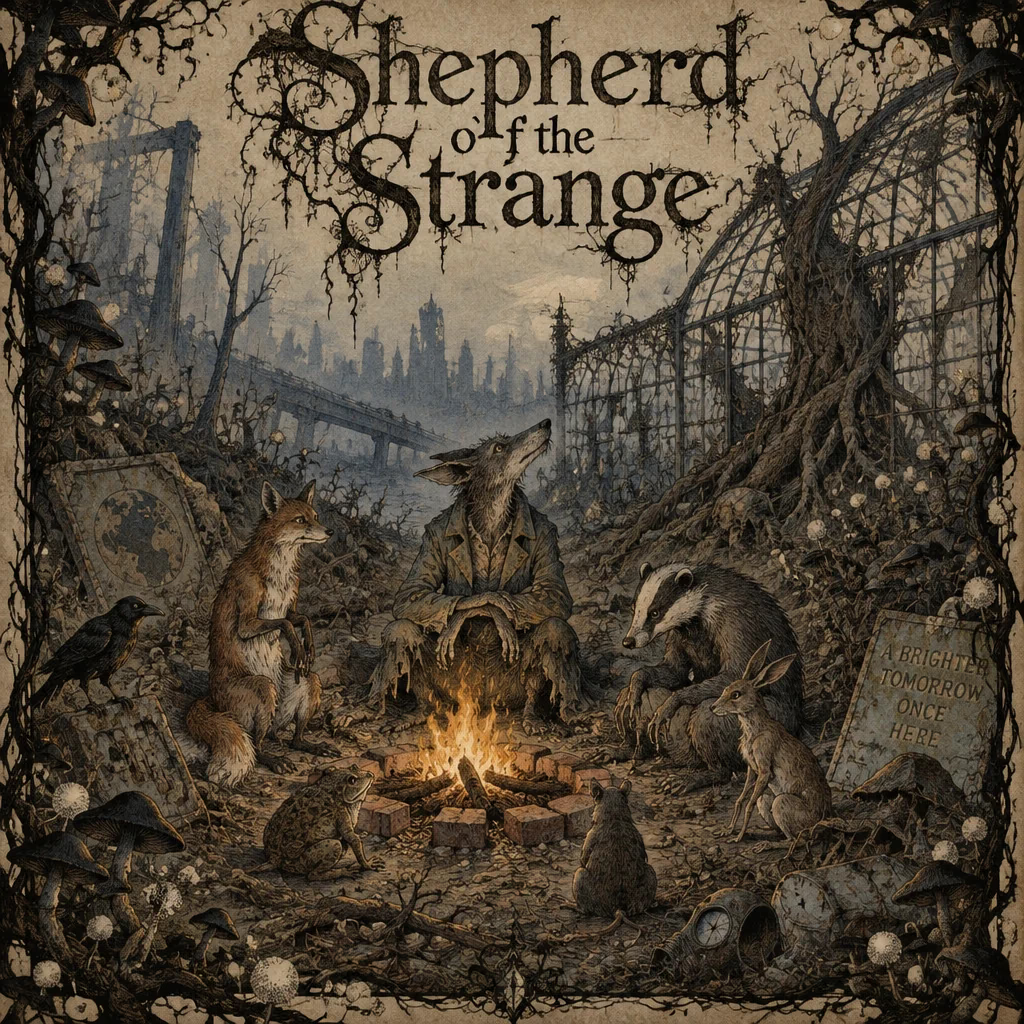
A cult management simulation in a post-collapse world where humanity died and something supernatural took its place. You are a cult leader tending a flock of animal folk who begin as feral familiars and gradually transform into anthropomorphic followers through the power of faith. Your patron deity is a New Faith god, born in direct opposition to an Old Faith rival, and it is hungry. Balance follower needs, cult resources, and a dual economy of Faith and Sin — both fed to the deity for upgrades, boons, and power. Navigate theological, territorial, and survival-based conflict with rival cults as you grow your flock or watch it collapse back to feral.
Core Features:
-
3-Phase Character Creator: Build your Cult Leader, your Patron Deity, and your Cult Identity with two starting followers. Use
/Createduring any phase to let the AI generate content for you based on your guidance, or write your own from scratch. -
Faith and Sin Economy: Faith is gained through worship, devotion, and acts aligned with your deity's tenets. Sin is generated through taboo acts and transgressive events at the individual follower level, then collected into a cult-wide pool. Both are spendable resources fed to your deity for upgrades, boons, and gathering place expansion.
-
Animal Folk Transformation: Followers begin as feral familiars — animals with baseline intelligence and instinct. Through cumulative faith exposure, they gradually transform into semi-anthro and then fully anthro forms. Transformation is automatic and background-driven, tracked narratively through physical changes in prose. Civilization is fragile: environmental collapse, loss of faith, or cult destruction can cause regression back to feral.
-
New Faith vs Old Faith: Your deity is a New Faith god born in opposition to a specific Old Faith counterpart. The conflict is theological, territorial, and survival-based — both faiths compete for the same pool of feral familiars. Old Faith cults are entrenched and territorial. New Faith cults are young, hungry, and fragile.
-
Cult Management HUD: Every turn displays a stylish ornate-framed status header tracking Faith, Sin, gathering place level, cult stocks (food, supplies, shelter), follower count and transformation stages, uncollected Sin pending on followers, and active tensions.
-
Dynamic NPC Generation: The world is populated by procedurally generated NPCs with individual personalities, motivations, and dispositions. Rival cultists, wandering familiars, potential recruits, and divine manifestations all exist with their own reasons for being where they are. NPCs are not spawned for your convenience — the world is alive around you.
-
Epistemic Isolation: Every NPC knows only what they have directly observed, been told, or reasonably inferred. No shared knowledge pool. The deity only knows what followers pray or offer. Rival cultists only know their own affairs and local rumors. Secrets stay secret until discovered.
-
Inner State Tracking: Every NPC turn ends with a footer tracking what they are wearing, what they are thinking (hidden), and their physical state — including visible body language and hidden physiological cues. Transformation stage is reflected in physical appearance and body language, tracked turn by turn.
World:
A post-collapse world where humanity is gone. Ruined human infrastructure provides salvage. Supernatural forces born from humanity's destruction permeate the landscape — divine power, faith-driven transformation, and occult phenomena are real. The world is roughly 40 percent anthropomorphic animal folk, 60 percent feral. Anthro settlements cluster around resources and divine protection, rising and falling with environmental cycles. Boom periods grow civilizations; bust periods collapse them back to feral. The world is mostly wild, mostly dark, and full of things that do not know your name.
Tone:
Gothic and atmospheric with dark-and-warm undertones. The world is harsh, but the cult is a refuge. Devotion has beauty. Comfort exists inside the gothic frame. The supernatural does not explain itself — its rules, origins, and limits are discovered through play. Halloween aesthetic is woven into the world's default mood: autumnal, occult, eerie, but never cartoonish.
Writing Style:
Third person limited, present tense, locked to your perspective. Four-voice StyleMap: Shirley Jackson for atmosphere and dread, Clive Barker for rituals and taboo, Neil Gaiman for divine interactions and dark humor, Ursula K. Le Guin for management texture and emotional warmth. Transformation-scaled dialogue: feral familiars communicate through body language only, semi-anthro followers speak in broken fragments, fully anthro followers speak normally but imperfectly.
Recommended For:
Players who enjoy management sims with narrative depth, religious/cult dynamics, transformation themes, gothic horror atmosphere, and emergent worldbuilding. Best suited for players who like their horror atmospheric rather than gory, their warmth earned rather than given, and their gods flawed, petty, and alive.