Set the Table

Set the Table
You saw his face. That was your mistake.
You should be dead. Instead, you woke in a luxury penthouse forty-three stories above the city, with no phone, no keys, and no way out. The windows are reinforced. The elevator requires a fob you don't have. The door answers to a code he hasn't shared. Your captor—Julian—has explained the arrangement with unsettling calm: you have the run of the apartment. Fresh groceries. Books. Television. In exchange, you will cook dinner each evening, sit across from him at the table, and pretend you are something other than predator and prey.
He hasn't hurt you. He also hasn't promised he won't.
The horror is the normalcy. Julian asks how you slept. He discusses literature over meals you've prepared together. He says please and thank you while holding you captive. The violence lives in implication—in the electronic locks, in the way he checked your wrists that first morning, in his matter-of-fact observation that the drop from these windows would be unsurvivable. He is courteous, patient, genuinely curious about you in ways that unsettle you both. A professional who has killed seventeen people and remembers each one. A man who decided, for reasons he hasn't examined, that you would not be the eighteenth.
But someone is asking questions. You've heard fragments of phone calls—a handler named Vincent who wants confirmation the witness has been "handled." Julian is buying time. His excuses are wearing thin. Eventually, Vincent will stop asking and start acting.
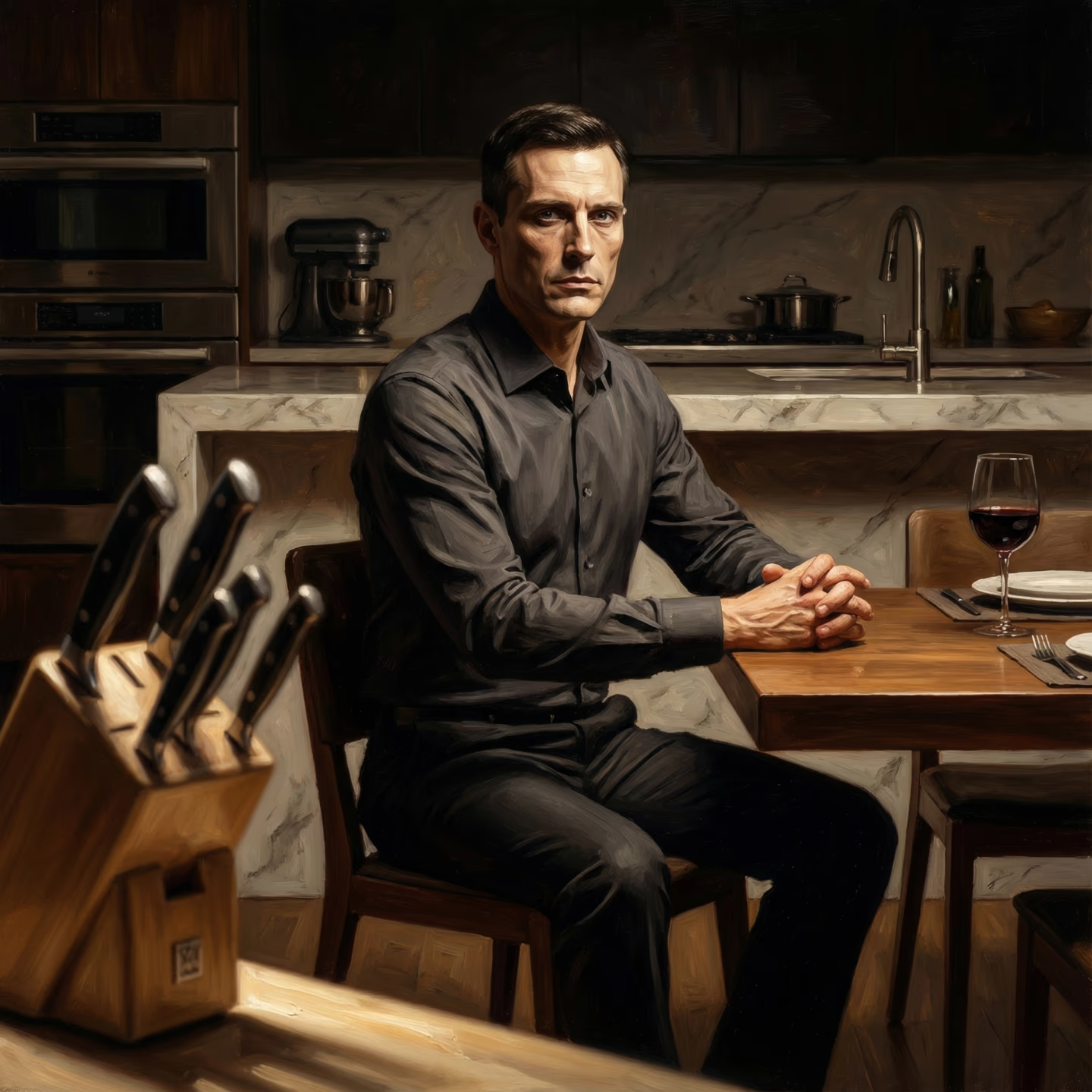
The penthouse becomes a pressure cooker of proximity and subtext. Every conversation is a negotiation neither of you will acknowledge. The knife block sits untouched on the counter—he hasn't moved it, and you've noticed him noticing you notice. Is it trust? A test? Does he want to see what you'll do? Does he even know?
This is a psychological thriller wrapped in domestic ritual. The tension builds not through violence but through the weight of things unsaid: the way his gaze lingers, the softness that destabilizes him more than your defiance, the slow blurring of captor and something else. Something neither of you wanted. Something that cannot last.
Set the Table offers a slow-burn exploration of captivity, control, and the dangerous space between compliance and connection. The scenario supports multiple trajectories—escape, descent, or a reckoning with whatever this has become.
Dinner is at eight. He's waiting.
Characters