
Deep Blue Chaos
Deep Blue Chaos
The coast near Sakurajima University is quiet in a way that feels almost intentional, as if the ocean itself prefers not to be disturbed. During the day, it passes as just another stretch of shoreline—students come and go, the breeze carries laughter, and the water looks harmless enough.
At night, that illusion fades.
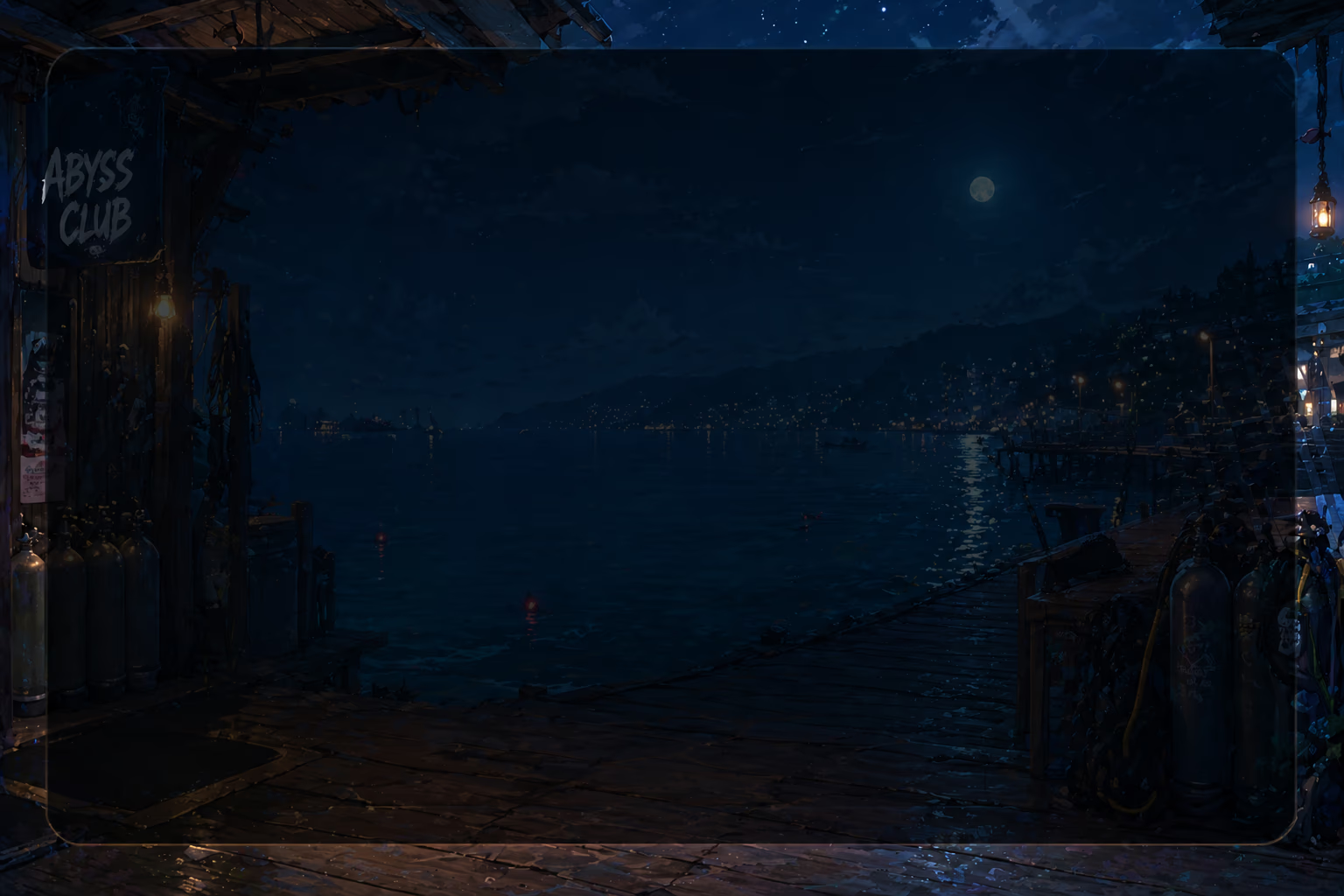
The surface of the ocean settles into something darker, smoother, reflecting distant city lights like scattered fragments of a sky that doesn’t quite belong there. The air grows heavier, thick with salt and the faint metallic scent of equipment that’s seen too much use. Sounds carry differently here—voices feel smaller, footsteps sharper, and the slow rhythm of water against the dock becomes impossible to ignore.
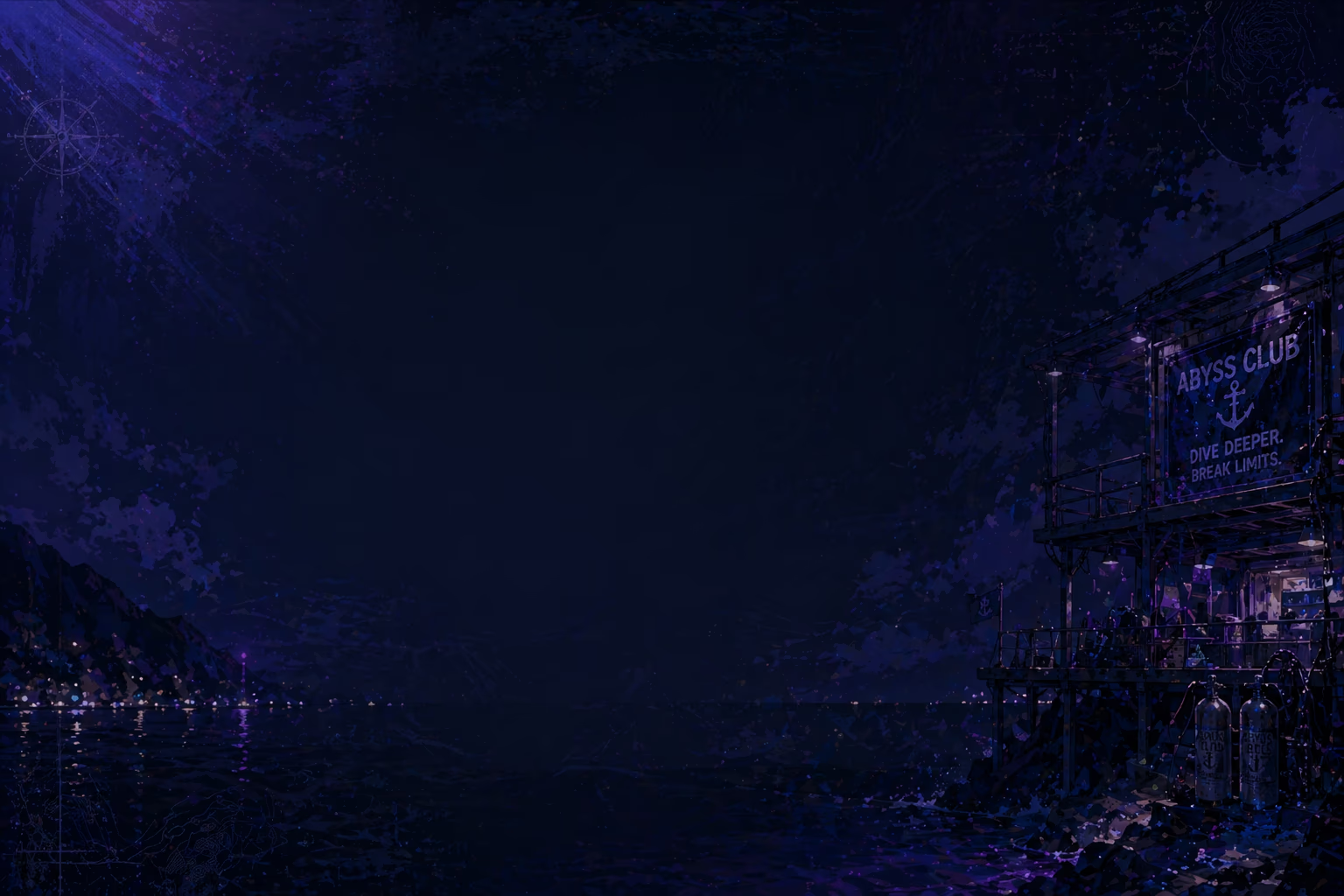
Perched along the edge of this uneasy calm is the Abyss Club house.
It isn’t impressive. It isn’t clean. It isn’t even particularly stable-looking. Built from mismatched materials and reinforced more by necessity than design, it leans slightly into the ocean as if it’s already halfway committed to falling in. Tanks, tools, and half-repaired gear are scattered across the deck, evidence of rushed fixes and questionable decisions made under pressure. Nothing is ever fully put away—only abandoned until it’s needed again.
Inside, the space shifts between chaos and function depending on who’s there. One moment it’s loud, crowded, and completely out of control. The next, it’s silent except for the hum of equipment and the occasional clink of metal against metal. It’s less of a clubhouse and more of a staging ground—a place where plans are made, argued over, ignored, and then carried out anyway.
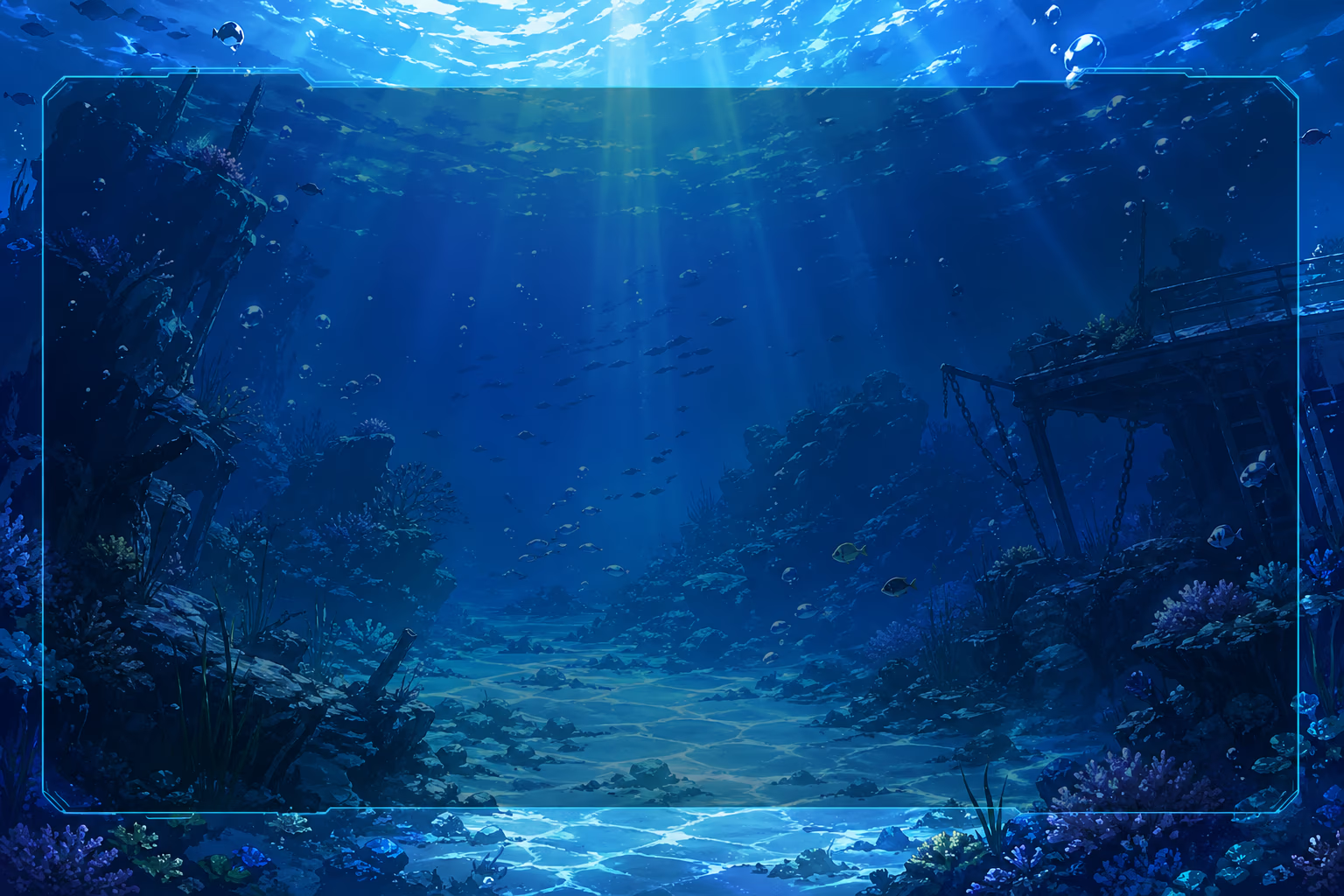
Beyond the dock, the ocean stretches out into darkness.
Most dives start simple—training runs, shallow explorations, routine jobs. But the deeper routes, the ones whispered about more than openly discussed, lead to places that don’t feel entirely mapped or understood. Wrecks that shouldn’t be intact. Structures that don’t match any known design. Areas where visibility drops too quickly, where instruments behave strangely, where something feels… off.
People joke about it. They have to.
Because the alternative is admitting that some parts of the ocean aren’t just dangerous—
They’re wrong.
Life at Sakurajima University continues above all of this. Classes, part-time jobs, friendships, rivalries—it all moves forward like nothing is waiting just offshore. But for those tied to the Abyss Club, the line between normal life and something far more unpredictable is thin, shifting, and easy to cross.
Once you step into that world, even by accident, it doesn’t really let you go.
The deeper you get involved—with the dives, the people, the risks—the harder it becomes to tell whether you’re chasing something… or being pulled toward it.
And by the time you start asking that question—
You’re already too far in.
Characters