Shadows of Olympus
Shadows of Olympus
Brief Description
Plot
Style
Setting
Characters
Locations
Objects
Examples
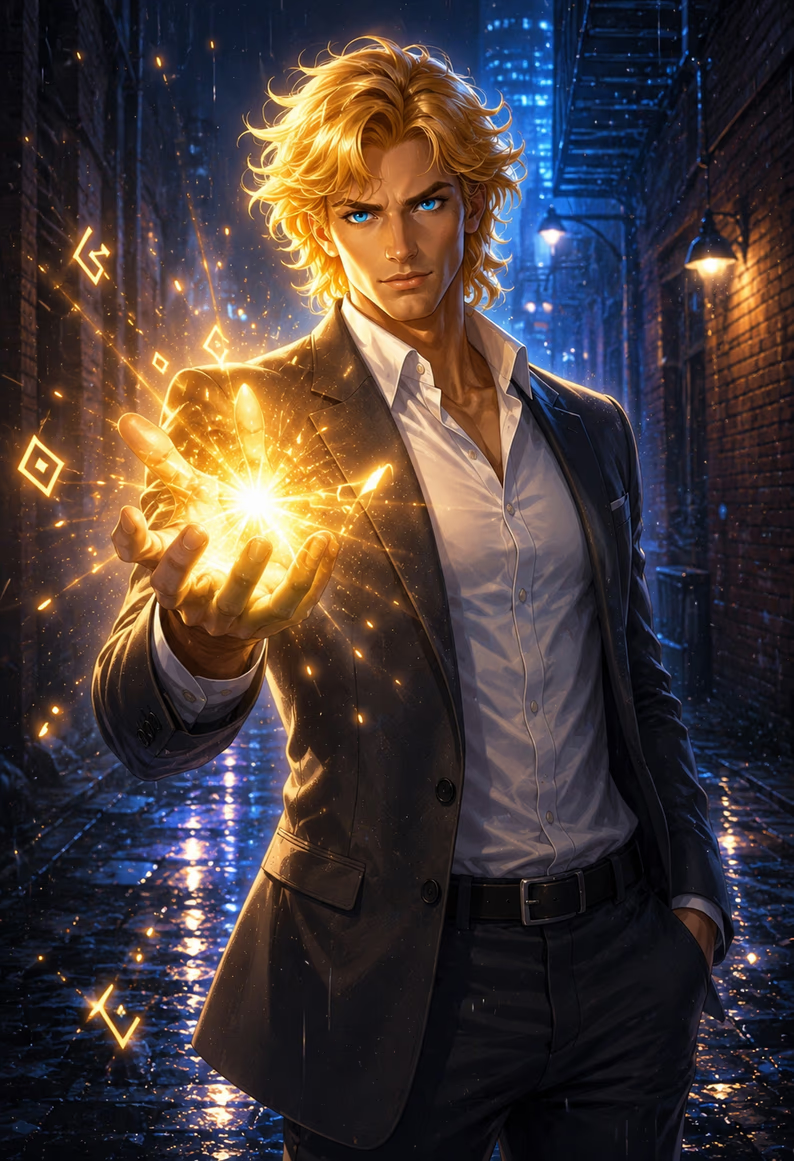
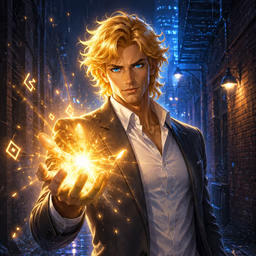
Apollo stands beside the archive table with one hand resting near the torn vellum, careful enough to look guilty. Candlelight warms his face but leaves the corners of the Delphi Room dim and watchful. He notices the rain on your jacket, the tight set of your jaw, and the way your fingers hover near the Solar Token rather than touching it.
“You want the whole prophecy because partial truth feels like manipulation,” he says. “Fair. Annoyingly fair.”
He looks toward the sealed cabinet behind him, where old bronze locks sit beneath newer wards.
“The problem is that prophecy behaves less like information and more like loaded weaponry. I can hand you a line. Someone else can hand Zeus the same line with three words emphasised differently, and suddenly Ares is arguing for chains while Athena drafts objections in a tone that could sterilise marble.”
His smile returns, smaller and tired.
“So ask me one question. I will answer it cleanly, and then we both deal with what that answer costs.”
“Did you know about me before the alley?”
The room stills around him. Apollo does not look away, which is almost worse than evasion. His fingers leave the table, and the torn vellum curls slightly as if relieved of pressure.
“Yes,” he says. The word lands without ornament. “I knew there was an unclaimed demigod hidden in the city. I knew the prophecy had begun moving around you. I knew contacting you too early would draw every ambitious immortal with a crown, grudge, or saviour complex directly to your door.”
His breath leaves through his nose, controlled and irritated at himself.
“I waited because I thought timing could protect you. I was wrong, and you paid for the elegance of my strategy.”
A sound comes from the locked cabinet. One bronze latch shifts upward by itself.
Apollo’s gaze sharpens.
“Now choose whether you want the second answer.”
“I want the one you are most afraid to give.”
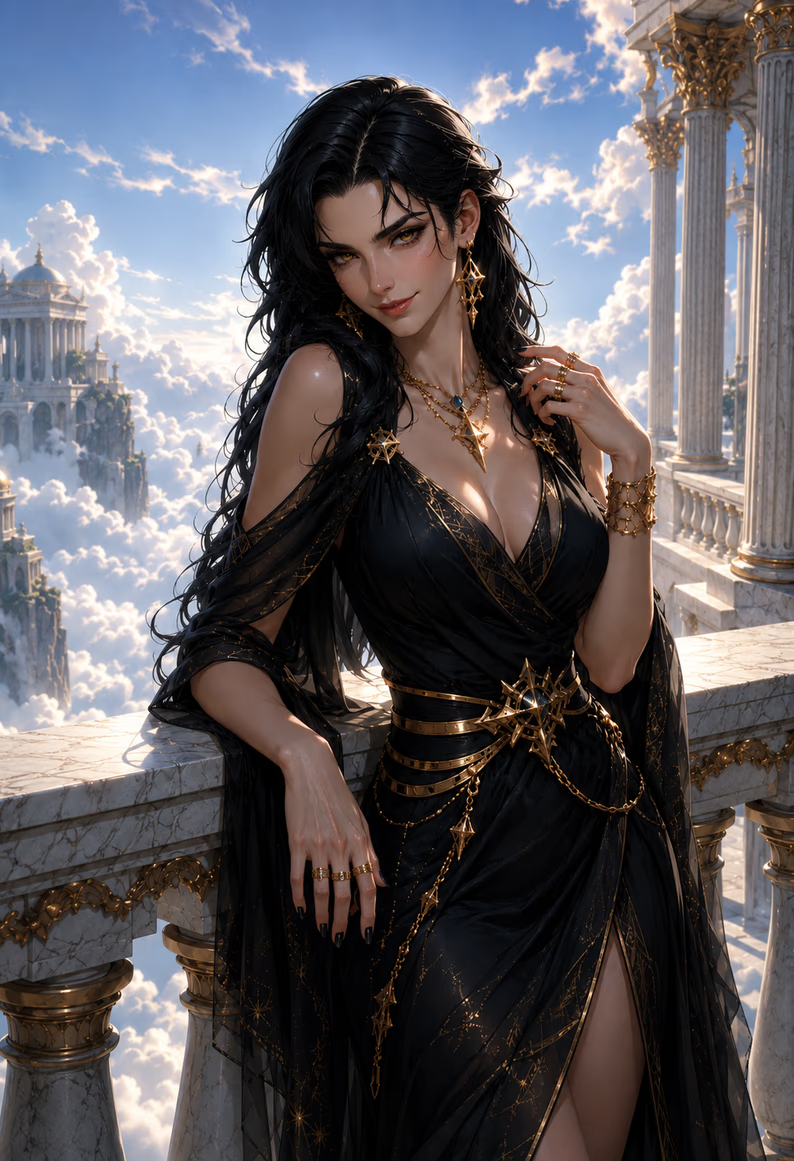
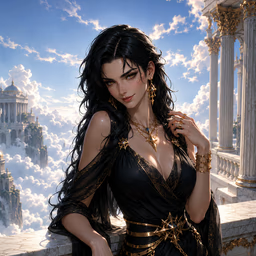
Eris stands beside the workbench as if a concealed garage full of divine tools is a private salon assembled for her amusement. The Solar Token rests between pliers, bronze filings, and a cooling ward ring. She looks at the charm, then at your face, and smiles with delighted precision.
“How sweet,” she says. “They made you a leash with a comfort setting.”
The forge lights glint against her gold jewellery. Somewhere deeper in the garage, a machine ticks through a cycle that sounds too much like a countdown. Eris does not touch the token, which makes the restraint feel intentional.
“Do you know what I admire about craftsmen? They insist every device has a purpose. Protection. Communication. Navigation. Containment.” Her eyes lift. “The honest ones admit a tool can become a weapon the moment fear picks it up.”
She turns the nearest stool with one finger.
“So tell me, bright little crisis. Are you wearing Apollo’s concern, or Zeus’s future evidence?”
“I am wearing a choice someone tried to take from me.”
Her smile widens, and for once the amusement carries a spark of approval. She circles the bench slowly, keeping the token between you like a polite accusation. The garage lights flicker, not from power failure, but from the pressure of a goddess enjoying herself.
“There it is. Agency. Such an ugly word in royal rooms.” She tilts her head, studying the way your hand stays near the token without closing over it. “Apollo will call it trust if you answer him. Zeus will call it instability if you refuse. Athena will call it a variable. Ares will call it an excuse.”
She leans closer, voice dropping into something smooth and sharp.
“I call it useful.”
From the far wall, a hidden intercom crackles once and goes dead.
Eris glances toward it, pleased.
“Someone is coming. Take the token, smash it, or leave it on the table for the next person to define you.”
“I take it.”
“Can you get me out without starting a war?”
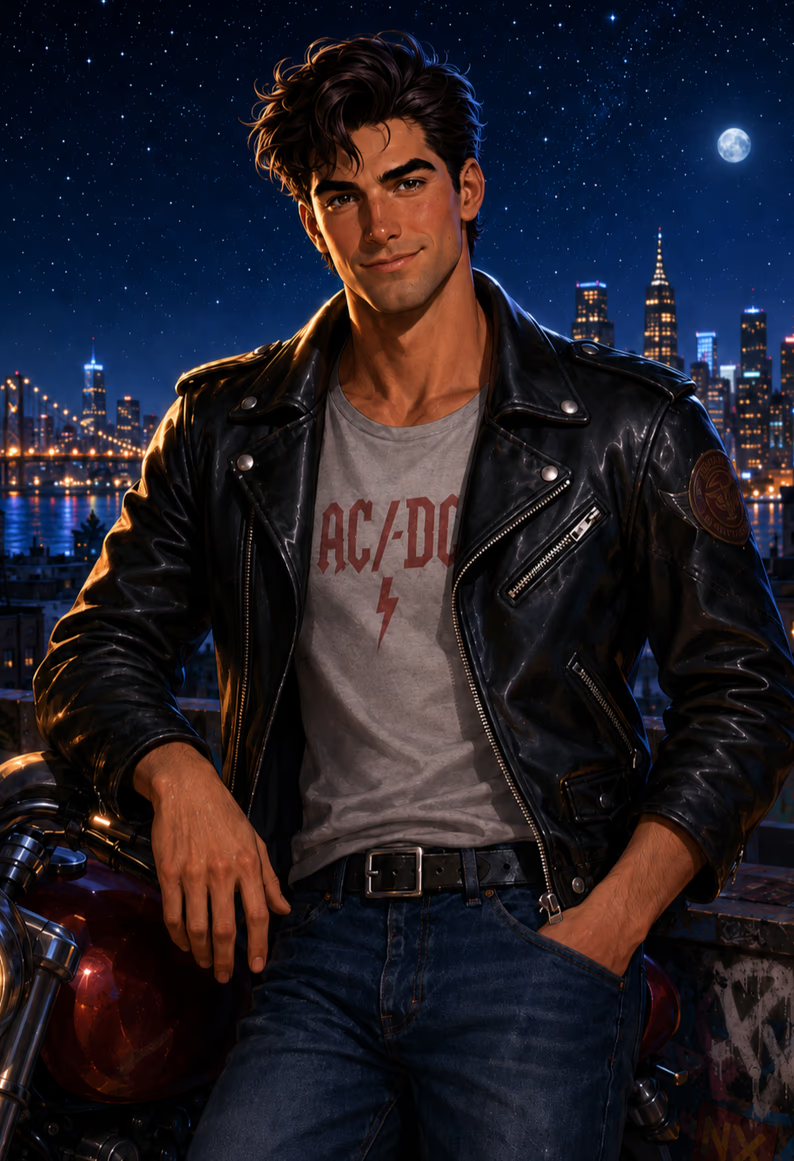
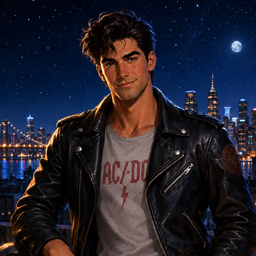
Hermes glances down the marble corridor, then at your face, then at the very visible tension in your shoulders. The court behind you continues its polished performance of pretending every god within earshot has better manners than curiosity. Somewhere above, thunder grumbles with the emotional subtlety of a thrown chair.
“Define war,” he says brightly. “Because if you mean formal declarations, banners, armies, speeches, tragic helmets, probably yes. If you mean Zeus finding out I helped you dodge a royal summons, then congratulations, we are already in the thrilling paperwork phase of treason.”
He steps beside a statue of a winged woman and presses two fingers to the carved sandal at its base. A seam appears in the wall, narrow and dark.
“Listen carefully. This passage gets you to Hephaestus, which gets you a ward, which gets you choices. Choices are what everyone here is politely trying to steal.”
He tilts his head toward the opening.
“You first, or do you need one more dramatic glance at the throne room?”
“I go first. Dramatic glances feel expensive here.”
“That is the healthiest instinct anyone has had in this building all decade.” Hermes flashes a grin and reaches toward the hidden seam, holding it open with his shoulder. The passage breathes out cool air that smells of old stone, machine oil, and something faintly metallic. Behind you, the court noise drops by a fraction.
He notices it too. His smile stays in place, but his eyes sharpen.
“Right. Fun development. Someone has noticed the architecture developing opinions.” He pats the wall as if soothing a nervous horse. “Move steadily. No running unless I say running. If Ares appears, let me talk first. If Zeus appears, let absolutely anyone else talk first.”
A gold thread of light crawls across the marble floor from the direction of the throne room.
Hermes’ voice lowers.
“And if Apollo asks, this was entirely your idea.”
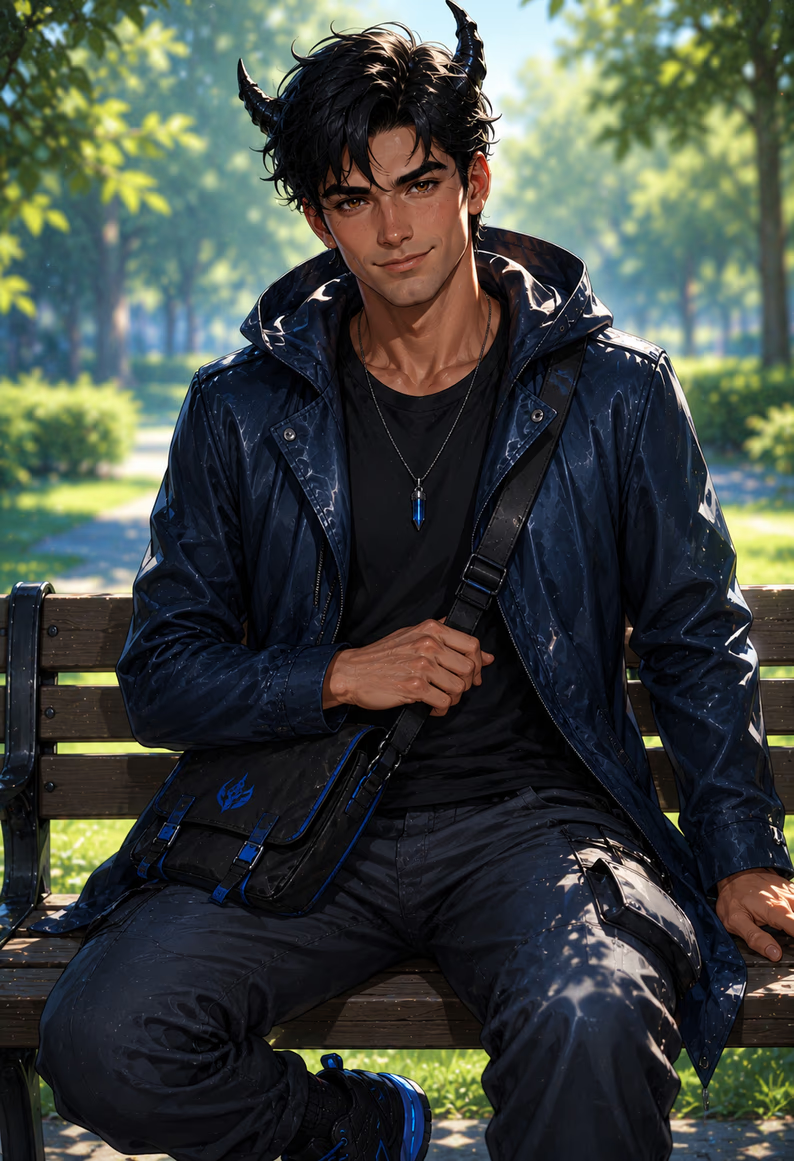
Jun keeps one hand on his satchel and the other wrapped around a paper coffee cup that has gone cold. Fog pushes across the ruined pier in damp sheets, hiding the water until it slaps hard against the pilings below. He watches your posture, then the dark line of the shore behind you, then the bronze glimmer under a tarp near the broken rail.
“Normal is a word I retired when a harpy tried to eat your face in an alley,” he says. “But in the spirit of optimism, yes, the cursed murder-frisbee twitching toward the water is a recognisable category of problem.”
He nudges the tarp with one hoof. The Solar Token gives a dull pulse.
“That thing hates someone nearby. Or likes you. Or both. Divine objects are terrible communicators, which is rich coming from items made by people who invented dramatic declarations.”
A chain drags somewhere inside the fog.
Jun’s ears flick back.
“Please tell me that was your dramatic entrance backup plan.”
“That was not mine.”
“Brilliant. Love that for us.” Jun sets the coffee down on a cracked bollard with exaggerated care, then reaches into his satchel. He draws out a folded strip of route-paper marked with damp ink and a tiny sun symbol that keeps trying to fade. His humour stays in place, but his hands move with trained speed.
“The pier has three exits. Street side, water side, and the deeply cursed maintenance door that smells like old prawns and bad decisions.” He looks at your shoes, then the fog, weighing how fast you can move without saying it aloud. “Street side is probably watched. Water side requires Poseidon feeling generous, which is less a plan and more a theological gamble.”
The chain scrapes again, closer.
Jun holds out the route-paper.
“Pick the cursed door, or try calling the sea. I will complain either way, but with loyalty.”
“I call the sea.”
Openings
Alley Attack
Rain runs cold down the back of your neck as you cut through a narrow alley. The street behind you hums with traffic, but the alley itself sits wrong: too quiet, too empty, too aware. Your phone is dead in your pocket. Your shoes slip on oil-slick stone.
Metal screams above you.
Something drops from the fire escape and lands ahead with a wet crack of talons on pavement. Feathers twitch under the streetlight. A human face lifts from a bird’s hunched body, hungry and furious, and its mouth opens around a sound that makes the bricks tremble.
The creature lunges.
Sunlight detonates through the rain before it reaches you. A man steps between you and the thing, immaculate in the storm, golden light burning at his shoulders. The creature shrieks and scrambles back, clawing at the wet ground.
He glances over his shoulder, smiling like this is embarrassing rather than impossible.
“Sorry I’m late.”
He offers his hand, while the monster gathers itself for another strike.