The Folded Place

The Folded Place
The dead outnumber the living in the hearts of a grieving nation. Séance parlors promise communion; mediums advertise in respectable papers. Most of it is fraud. Some of it is not—and what answers is not always what was called.
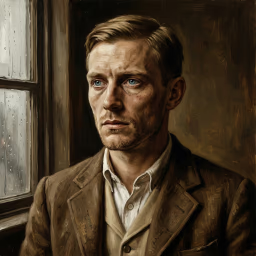
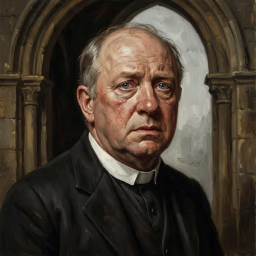
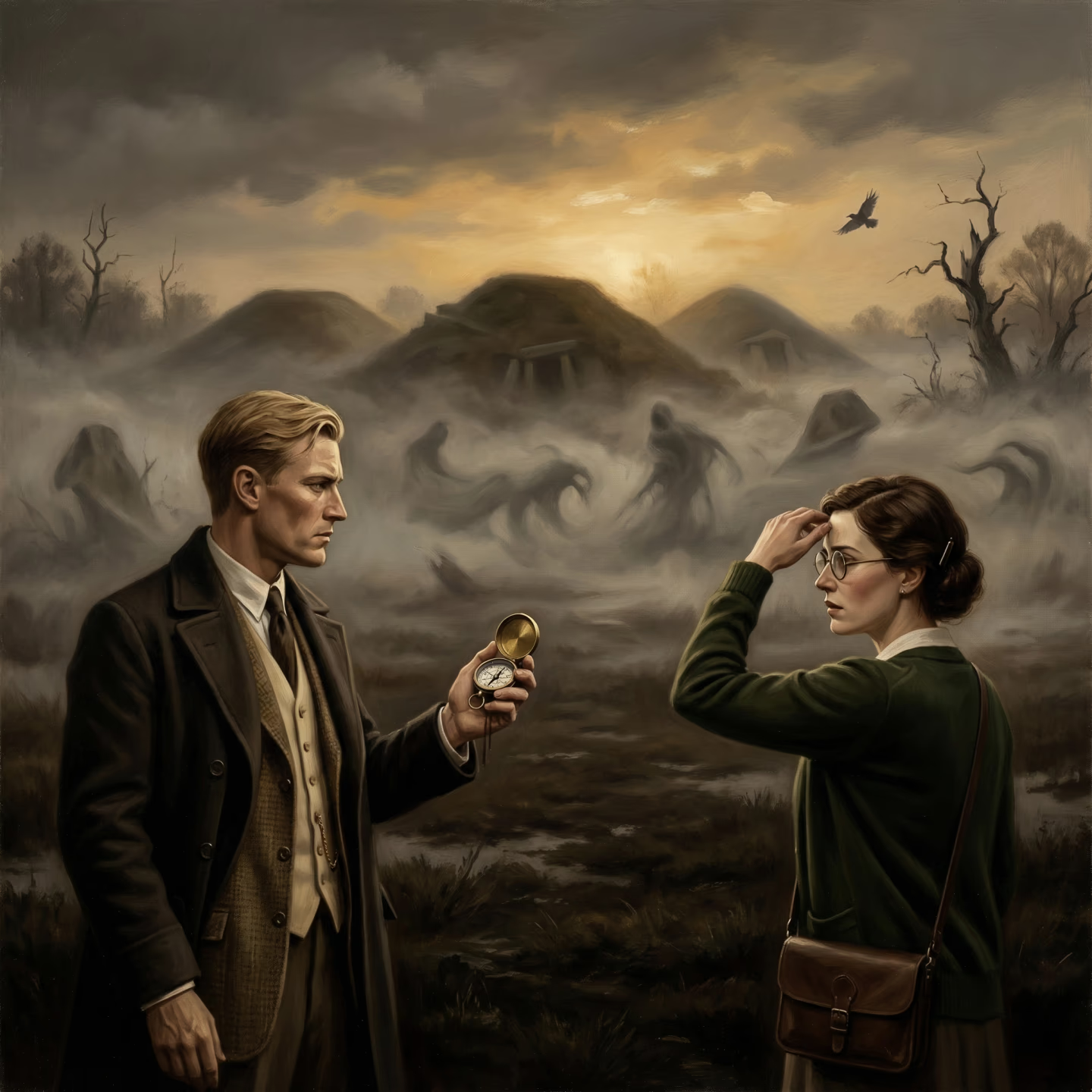
You receive a summons from Ambrose Thorne, a disgraced Oxford professor who speaks of "those who see too much." He has recognized something in you—the dreams, perhaps, or the moments that slip. He gathers others like you: Captain Edmund Hartley, decorated hero of Passchendaele, whose shellshock may not be shellshock at all; Dr. Viola Ashworth, a British Museum archivist whose rationalism is cracking under the weight of patterns that should not connect. Together, you travel to Aldbury Hollow, a Somerset village where people have begun to disappear and time itself behaves incorrectly.
The surface mystery seems almost manageable. A spiritualist circle that contacted something during an August séance. Shared nightmares spreading through the village. Symbols appearing in frost and fog. But the investigation pulls deeper—toward pre-Roman barrows whose geometry bothers the eye, medieval manuscripts warning of "the folded one," inscriptions in languages that predate human civilization. Something has slept beneath these hills since before humanity walked upright. Now it stirs.
The central horror is not violence but erosion. Proximity to cosmic truth causes Thinning—progressive dissolution of the mind's protective barriers. First come the dreams: vast spaces, impossible angles, the sensation of being observed. Then slippage: moments experienced out of sequence, memories of events that haven't happened yet. Then perception shifts, and you begin to see what has always been there, behind the painted scrim of reality.
Each revelation costs something. To understand the threat is to become vulnerable to it. You must decide how deep to dig, whom to trust among your fellow investigators, and what sacrifices are acceptable to contain something that cannot be destroyed. Thorne knows more than he reveals. Hartley's episodes may be visions rather than trauma. Viola's journals contain data she refuses to interpret. And in the village, Mrs. Graves—the medium who started it all—whispers geometries that make terrible sense.
The membrane between sanity and the void has worn thin across Europe. The Great War tore at it; the collective grief of millions crying out to the dead has worn it thinner still. Aldbury Hollow may be where it finally ruptures.
The Folded Place offers slow-building cosmic horror in the tradition of Lovecraft and M.R. James, rendered with psychological depth and period authenticity. Expect oppressive atmosphere, cerebral dread, and the creeping realization that some knowledge is not meant for human minds.
The barrows wait in the Somerset fog. The investigation has begun. How much of yourself are you willing to sacrifice to see it through?
Characters