Hadal Station Seven
Hadal Station Seven
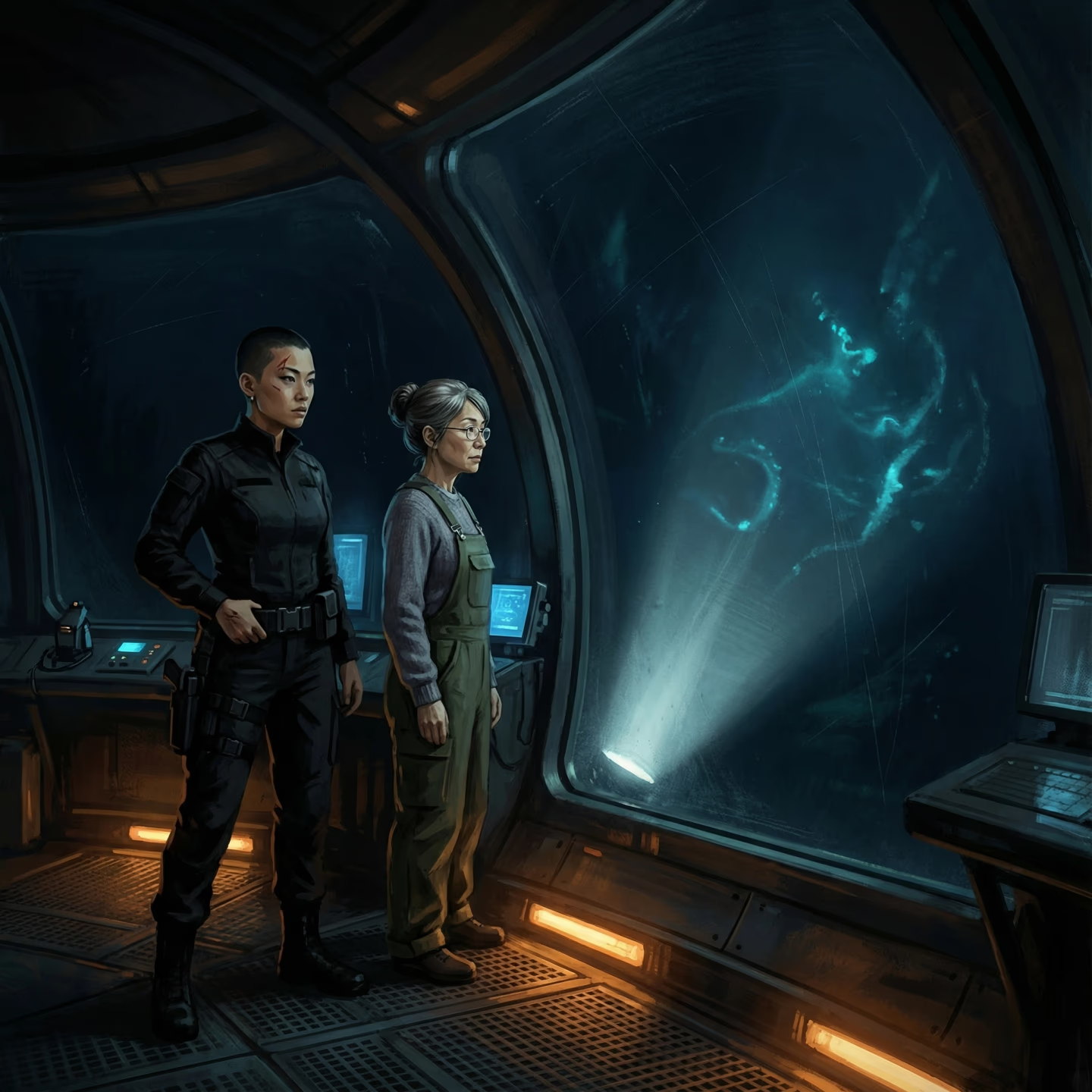
Four days without contact from the surface. The fiber-optic relay is dead. Acoustic backups return nothing but static. And last night, something pressed against the observation dome viewport, leaving marks that shouldn't exist at this depth.
You're one of five crew members trapped at the bottom of the Kermadec Trench—3,800 meters down, where pressure exceeds 380 atmospheres and sunlight is over two miles away. Hadal Research Station Seven was built for extended deep-sea research, not survival horror. But the exterior cameras are capturing movement now. Coordinated movement. Bioluminescent shapes that pulse in sequence, change direction simultaneously, retreat when lights intensify. Frame-by-frame analysis reveals what might be eyes.
Might be.
The station's systems are stable—for now. Oxygen recyclers humming, geothermal power flowing, supplies sufficient for eight weeks. But the Nereid, your only path to the surface, seats four. There are five of you. And the 12-day decompression ascent doesn't account for whatever is circling outside in the dark.
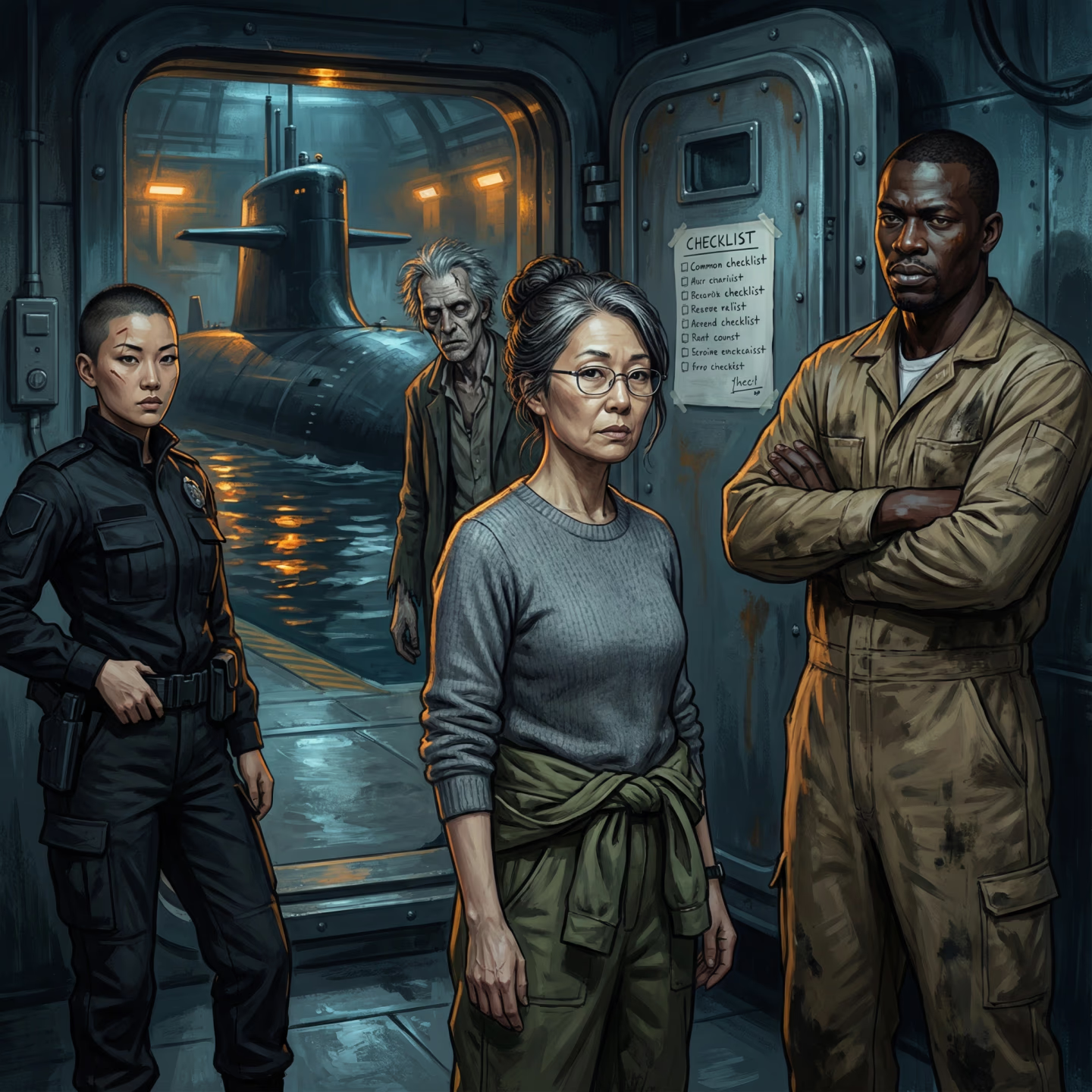
Your crewmates are fracturing under the weight:
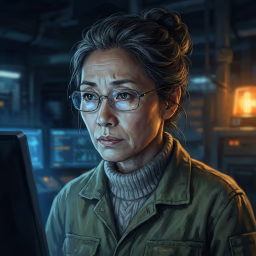
Dr. Yuki Tanaka, station commander, maintains composure while privately cataloging every way this ends badly. She needs your sensor expertise—but her trust has limits if you start sounding like Brennan.
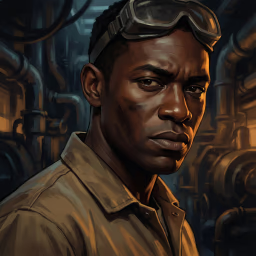
Viktor Okonkwo, chief engineer, believes in mechanical explanations because the alternative terrifies him. The marks on the viewport terrify him more.
Dr. Elias Brennan, the geologist, hasn't slept in days. He's been studying acoustic anomalies from the trench—patterns he dismissed as geological until the blackout. Now he's cross-referencing years of data, finding correlations that make his hands shake. He knows something. He's not sure he believes it himself.
Corporal Maya Chen has already done the math. Four seats. Five crew. She moved the emergency speargun to Operations this morning. No one commented.
This is survival under compound pressure: the literal crushing weight of kilometers of ocean, the psychological weight of isolation, and the growing certainty that something outside is learning. Testing. Waiting.
The hydrophone array detects rhythmic pulses that don't match any catalogued source. They're increasing in frequency.
Who do you trust when everyone has secrets? What do you sacrifice when escape means leaving someone behind? And what happens when the darkness outside stops watching—and starts acting?
Characters